Which of these food trends do you find as healthy?
Are you likely to try insects snacks (rich in proteins and minerals!) or do you prefer watermelon with a scoop of ice cream?

Monday, 9 April 2018

Monday, 26 March 2018
6 Ways To Lower High Blood Pressure
One in every three men and women have high blood pressure in the United States. High blood pressure can be caused by several risk factors, including being overweight, genetics, stress, and eating too much salty food.
High blood pressure can also be dangerous to one’s health as it makes the heart work even harder to pump blood out, according to WebMD. In return, it can cause high blood pressure can lead to blurred vision, dizziness, headaches, and shortness of breath.

Taking steps toward a healthy lifestyle can not only help reduce high blood pressure but also lower the risk of heart disease and stroke. Here are six ways to lower high blood pressure.
Physical activity can not only help maintain a healthy weight, but reduce the risk of diabetes, high blood pressure, and heart disease.
Adults looking to reduce high blood pressure should get at least 30 minutes of moderate physical activity such as cycling, dancing, playing basketball, running, as well as walking.
Health experts recommend eating five servings of fruit and vegetables a day. Bananas are packed with potassium, so eating one banana a day can lower high blood pressure.
Other fruits and vegetables that are good to eat are peaches, kiwis, kale, red peppers, and sweet potatoes.
More than 71 percent of men and women get their daily intake of sodium from eating fast food, according to Centers for Disease Control and Prevention. The daily sodium intake should be at least 1,500 milligrams per day with a maximum of 2,400 milligrams, says the American Heart Association.
Eating less fast food should help reduce high blood pressure.
Smoking cigarettes is the quickest way to increase high blood pressure and the risk of heart attack and stroke.
Looking to quit smoking? Try chewing on a toothpick, chewing gum, or exercise daily to get distracted from wanting to smoke.
Enjoying a cold beer or a glass of wine is a good way to relax on the weekend, however, drinking heavily can increase the risk of causing damage to the heart. Even drinking more than two drinks per day can raise blood pressure.
Excessive drinking can also lead to other health problems such as cancer, liver disease, and violence, says the CDC.
Tuesday, 20 March 2018
Home Remedies for a Sinus Infection
A sinus infection usually occurs due to a virus, but it can also be caused by bacteria or fungi. It is often triggered by a cold that causes swelling and inflammation of the sinuses and leads to a buildup of mucus, thereby blocking the sinuses.
Sinuses are hollow, air-filled sacs behind the cheekbones and forehead that, when filled with fluid, harbor germs giving rise to infection.
Other conditions that can cause a sinus infection include allergies, nasal polyps, a deviated septum, and exposure to pollutants and tissue irritants like over-the-counter nasal sprays, cigarette smoke and cocaine.
Common symptoms of sinus infections include a headache, facial tenderness, pain or pressure, nasal stuffiness, discolored nasal discharge, a sore throat, cough and fever. Some people may experience increased sensitivity or a headache when leaning forward.
To relieve the symptoms of a sinus infection, you can use some easy natural home remedies. Also, consult your doctor for proper diagnosis and treatment.

Here are the top 10 home remedies for a sinus infection.
1. Nasal Irrigation
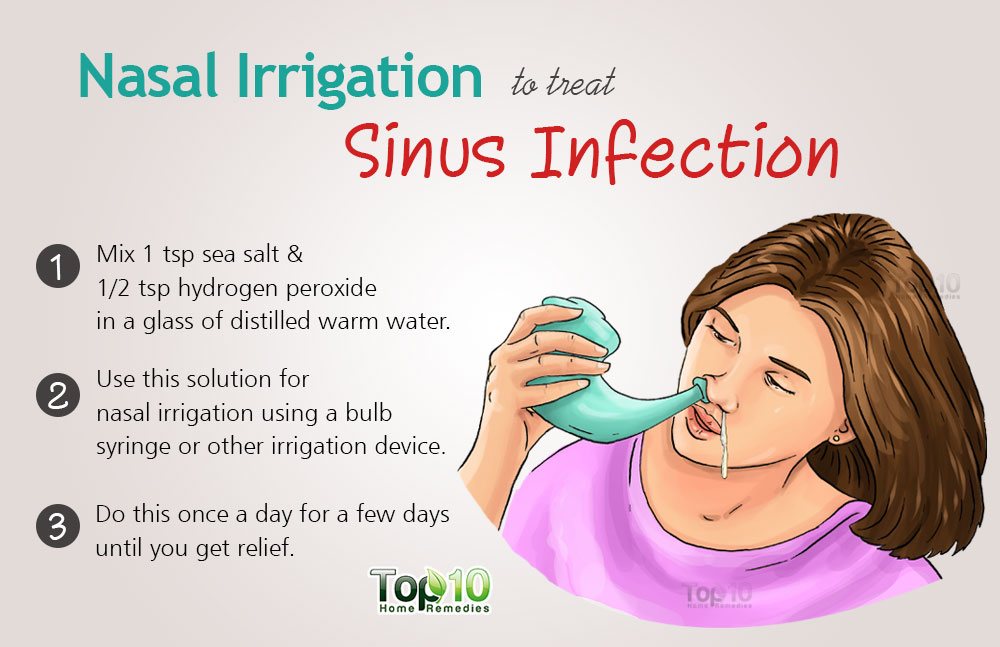
Nasal irrigation is highly beneficial for sinus infections as it helps clear out mucus and other debris from your sinuses. Plus, it keeps them moist.
- Mix one teaspoon of sea salt and one-half teaspoon of hydrogen peroxide in a glass of distilled warm water. Use this solution for nasal irrigation using a bulb syringe or other irrigation device. Do this once a day for a few days until you get relief. Do not use it more often than daily as it may irritate the mucus membranes.
- Alternatively, mix one-half to one teaspoon of pickling or canning salt and a pinch of baking soda in a cup of lukewarm distilled or previously boiled water. Use this solution for nasal irrigation. You can use it two or three times a day for about a week.
2. Apple Cider Vinegar
Apple cider vinegar has antiviral, antibacterial, antifungal and anti-inflammatory properties that help treat sinus infections. Taking apple cider vinegar at the start of colds, flu or allergies can help prevent a sinus infection from developing.
- Add two teaspoons of apple cider vinegar to a cup of warm water.
- Mix in one teaspoon of honey.
- Drink this solution three times a day for five days.
3. Cayenne Pepper
Cayenne pepper is an effective home remedy to open up and drain the sinuses. Also, it boosts immunity, reduces swelling and inflammation, and improves circulation.
- Mix one teaspoon of cayenne pepper in a cup of hot water. Drink it two or three times a day.
- Alternatively, you can eat a mixture of one teaspoon each of cayenne pepper and honey a few times a day.
Use either of these remedies for a few days or until you see improvement.
4. Onion
Onion works as an excellent decongestant to open up your sinuses. Plus, it contains sulfur compounds that fight bacteria and fungi.
- Chop an onion into small pieces and put the pieces in a pot of water.
- Let it boil for about five minutes, and then inhale the vapors for a few minutes.
- Next, strain the liquid and drink it.
- Repeat a few a times a day for about a week or until the congestion clears.
5. Garlic
Garlic works as a natural antibiotic to fight sinus infections caused by bacteria and viruses. It is particularly beneficial when the sinus infection is caused by bacteria. Garlic also has antifungal properties.
- Chop two or three garlic cloves, add them to a pot of boiling water and inhale the steam of this garlic-infused water for a few minutes. Repeat a few times daily until you get relief.
- You can also eat two to three fresh garlic cloves (preferably crushed) daily. Also include onion, garlic, cayenne pepper and horseradish in your soups and meals to help get rid of excess mucus.
6. Horseradish
Horseradish is another popular remedy for sinus infections as it helps remove mucus from the nasal passages. It also contains high levels of sulfur and works as a natural antibiotic.
- Put a pinch of freshly grated horseradish in your mouth.
- Hold it in your mouth until its flavor dissipates, and then swallow it.
- Repeat a few times a day for about a week or until the infection clears.
7. Ginger

Ginger has antiviral, antibiotic and anti-inflammatory properties that help treat sinus infections. The polyohenols present in ginger help inhibit the secretion of mucus, while maintaining normal nasal ciliary motility. Healthy cilia are important for sinus health as they filter allergens and prevent sinus infections.
- Cut a two-inch piece of fresh ginger root into slices.
- Boil the slices in one cup of water over low heat for about 10 minutes.
- Strain the solution, and mix some lemon juice and honey in it.
- Drink this tea a few times a day for about a week or until you get the desired results.
8. Oil of Oregano
This essential oil has antiviral, antibacterial and antifungal properties. Plus, being an anti-inflammatory, it helps reduce inflammation. It also works as a great antioxidant and immune-booster.
- Put a couple of drops of the oil of oregano in one-half cup of boiling water and inhale the steam to clear the congestion and open up the sinuses. Do this daily until the infection is gone.
- Alternatively, mix two or three drops of oregano oil in a glass of water. Drink this solution twice daily until the infection clears.
- Another option is to simply put a drop or two of the oil under your tongue daily for about a week, or until you get positive results.
9. Turmeric

Turmeric has antibiotic, antiviral and anti-inflammatory properties that help treat sinus infections and congestion. It has an active compound called curcumin that helps heal the swelling in the sinus cavity and clear the airways.
- Mix a pinch of turmeric powder in a glass of warm water. Gargle with it a few times a day for a few days.
- You can also drink a glass of hot milk mixed with one teaspoon of turmeric powder and a little honey. Drink it daily for about one week or until the infection clears.
- Another option is to create a turmeric smoothie by blending two pieces of turmeric root (two inches), juice from one lemon, one tablespoon of honey, a pinch of cayenne pepper, one banana and one-half cup of water. Drink this smoothie daily for a few days.
10. Steam
Breathing in steam will help relieve nasal congestion and clear sinuses. Plus, a warm compress will help reduce sinus pressure and headaches.
- Run a hot shower and breathe in the steam vapors for about five to 10 minutes. Do this daily for a few days until the infection clears.
- You can also place a wet, warm towel on your face for a few minutes, several times a day for a few days to help relieve sinus pressure.
In addition to these remedies, follow some simple measures like drinking plenty of water to thin the mucus and using a humidifier to keep the nasal passages moist. Plus, adequate rest will facilitate speedy recovery.
Saturday, 17 March 2018
How to distinguish sinus infection from a cold?
A sinus infection, also known as sinusitis, is a very common upper respiratory tract infection that affects millions of people every year.
It occurs when your nasal cavities become swollen and inflamed. It is usually caused by a virus and often persists even after other upper respiratory symptoms are gone.
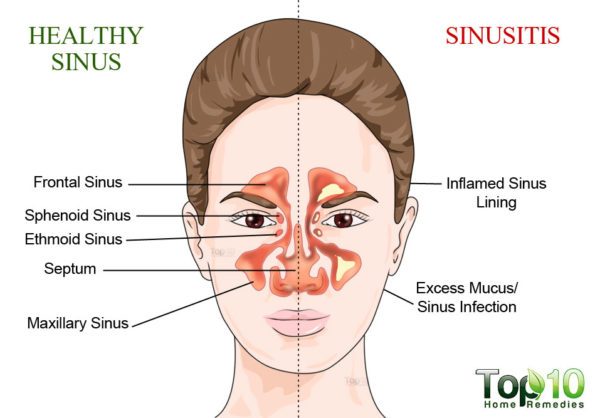
This type of infection may be acute or chronic. Acute sinusitis only lasts for a short time, whereas chronic sinus infections last for more than six to eight weeks or frequently recur.
An untreated sinus infection can potentially damage the sinuses and lead to ear infections, vision loss or even meningitis, so it is important to treat it right away. But treating a sinus infection is often delayed because people do not recognize a sinus infection in the initial stage.

Early symptoms of a sinus infection and a cold are very much alike, usually including a stuffy nose, slight fever, a scratchy throat, and feeling fatigued and just sick.
When it is a cold, the symptoms start improving in three to five days and you start feeling better within a week. But if symptoms persist for more than a week, you most likely have a sinus infection.
Here are some symptoms of a sinus infection that can help you distinguish it from a cold
1. Pain in Your Face
One of the best ways to distinguish between a common cold and a sinus infection is the pain and pressure you feel in your face with an infection.

Pain from a sinus infection can occur in and around your nose, in your upper jaw and teeth, and between your eyes. The accumulation of mucus in the sinuses also causes a feeling of heaviness or pressure in your face.
The pain may be worse when you move your head forward or touch the areas overlying your sinus cavities. Also, the maxillary sinuses located under your eyes may be painful when pressed or touched.
2. Yellowish or Greenish Discharge
Discolored nasal discharge – green, yellow or blood-tinged – is another sign of a sinus infection. This is mainly due to the virus in your system, which causes the discharge to change colors.

The discharge may also bypass your nose and flow down your throat, leading to tickling or itching sensations in the back of your throat.
Also, the discharge will be thick and hard to blow out of your nose. This is another major distinction between a sinus infection and a cold. The nasal discharge you experience with a common cold is clear and more liquid in nature.
When suffering from a sinus infection, you’ll find that you need to blow your nose more frequently to get rid of the thick accumulated mucus.
3. Coughing Up Phlegm
A cough often accompanies a sinus infection, but many people assume it is due to a cold or bronchitis.

Coughing due to a sinus infection usually is worse at night and in the morning. This is mainly because the sinuses drain down the back of your throat when you lie down, which triggers the cough receptor in the back of the nasal pharynx.
This type of cough also produces phlegm. Phlegm contains the bacteria or virus as well as inflammatory cells produced in response to an infection. The body tries to expel the phlegm that travels to your lungs through coughing.
You can reduce the frequency and intensity of your coughing by sitting upright to sleep. It will also help you sleep better, which is important for recovery.
4. Stuffy Nose that Lasts Longer
A stuffy nose is a classic symptom of both a sinus infection and a cold, but it usually lasts longer when it’s due to sinusitis.

This symptom is mainly due to inflamed blood vessels in the sinuses. Your inflamed sinuses may also make it difficult for you to breathe through your nose, giving you the feeling of a stuffy nose. Your voice may also sound “stuffy.”
To ease the problem, inhale steam or take a hot shower to thin the mucus so it’s easier to expel.
5. Headache
Another very common symptom of a sinus infection is a headache, but most people mistake it for a tension headache.

A sinus infection makes the nasal area as well as forehead feel so congested that it hurts and leads to a headache.
Also, the inflammation in the nasal area causes tightening of the muscles around the forehead and the top of your head, making the headache even worse. The headache can be unilateral (on one side) or bilateral (on both sides).
This type of headache usually gets worse when you bend forward and after waking up in the morning. The pain also can get worse if the temperature of your environment changes suddenly, like when it’s very hot outside and you enter an air-conditioned building.
6. Bad Breath
Bad breath, medically known as halitosis, is another common symptom of a sinus infection. In fact, they go hand in hand.

The back of the tongue, which resides in the throat, is home to bacteria that cause bad breath. During a sinus infection, excess mucus that is produced often slides down the back of your throat.
As the bacteria are bathed in mucus, it causes bad breath. This type of bad breath usually goes away once the sinus infection clears up.
To improve the smell of your breath, maintain oral hygiene by brushing twice a day and flossing once daily. You can also use a mint-flavored mouthwash.
7. Toothache
Believe it or not, pain in the upper teeth is a fairly common symptom of a sinus infection.

This pain is not an indication of an actual problem with a tooth. Rather, the pain occurs due to all the pressure building up in the sinus cavities in different areas of your face, which gives the impression of a bad toothache.
Friday, 2 March 2018
How to stay fit doing exercises for only 1 minute a day?
Are you too busy or too lazy to sacrifice an hour daily to keep you fit? But still, fill guilty because you know that you SHOULD take an action and take responsibility for your health?
Honestly, many times I promised, I swore to continue exercising every day and I kept that resolution only to find myself after 1 or 2 months failing again. There was lack of time, too many distractions or simply lack motivation. I find doing exercises BORING! Music helps to some extent but even with it, I cannot stand to repeat the same movements again and again.
Then one day I discovered... interval training. That idea sounded appealing to me - workout 1 minute instead of almost 1 hour!
If I was confident enough I would present myself doing exercises but instead, please get a few minutes to watch the video that explains a lot and you can just follow those fit men. They are doctors and explain the science behind the interval training.
Copy them, copy the idea of interval training and stay fit.
Wish you the best!
Aleksandra
Honestly, many times I promised, I swore to continue exercising every day and I kept that resolution only to find myself after 1 or 2 months failing again. There was lack of time, too many distractions or simply lack motivation. I find doing exercises BORING! Music helps to some extent but even with it, I cannot stand to repeat the same movements again and again.
Then one day I discovered... interval training. That idea sounded appealing to me - workout 1 minute instead of almost 1 hour!
If I was confident enough I would present myself doing exercises but instead, please get a few minutes to watch the video that explains a lot and you can just follow those fit men. They are doctors and explain the science behind the interval training.
Copy them, copy the idea of interval training and stay fit.
Wish you the best!
Aleksandra
Tuesday, 14 November 2017
How to treat a sore throat without medication immediately.
If you suffer from a sore throat, laryngitis, hoarseness or vocal cord paralysis you can treat the ailment without medication following the instruction given by this doctor. He will explain the subject matter to you and show the trick which does the work immediately, according to the comments of people who watched this video. Let`s try this and let us know if it has worked for you. Share it for people benefit!
Tuesday, 8 August 2017
The best of Japanese food to adapt into our diet
We asked a nutritionist for the best foods to borrow from a typical Japanese diet to improve your health.
The Japanese diet is widely considered to be one of the healthiest – and celebrities like Victoria Beckham and Madonna swear by it.
But which Japanese foods should you be adding to your diet? We asked nutritionist Cassandra Barns for the five foods in the Japanese diet that could help you live longer.
Fish
Heart health, brain health, eye health… fish is constantly lauded as the number one source of omega-3 fatty acids, essential for keeping these parts of our body in tip-top condition.
Cassandra comments: “We eat far less fish in the UK compared to Japan – it’s time we started upping our intake.
“These healthy fats also associated with keeping inflammation in check. As high inflammation is a characteristic of most chronic disease – from arthritis to heart disease to Alzheimer’s – keeping it under control may be a key factor in maintaining good health into old age.
“As a bonus, fish are rich in selenium, which is vital for our antioxidant defences and immune system, and B vitamins that help to keep our brain chemistry in balance.”
Fermented soya – miso, umami paste
“One of the ‘secrets’ of the health of Japanese women is thought to be their consumption of soya foods, thanks to the isoflavones they contain,” Cassandra explains.
 |
| Miso soup |
“Isoflavones act as phytoestrogens – plant substances that have a weak oestrogen-like effect in the body – so may be especially helpful for women after menopause, when natural oestrogen levels drop. Consumption of soya isoflavones has been associated with a lower risk of breast cancer and endometrial (womb) cancer in women after menopause, as well as better bone mineral density and reduced risk of osteoporosis and fracture.
“They’ve even been linked to benefits for cardiovascular health, including reduced risk of stroke and heart attack. All reasons why they could help us live longer!”
 |
| Natto |
“Rather than just any soya, the Japanese tend to consume traditional fermented soya foods such as miso, tempeh and natto. One of the benefits of the fermentation process is that the isoflavones are naturally converted into a form that’s much easier for the body to use. It also increases the vitamin K2 content, which plays a role in bone health and heart health too.” (...)
 |
| Tempeh |
Seaweed
Seaweed is rich in many minerals that we don’t often get enough off in our normal diet, such as iodine, zinc, magnesium and potassium – all great for boosting our heart health and immune system.
“Many of us don’t get enough of these minerals in our normal diet, even if we eat plenty of vegetables because the soil they grow in can be depleted. This doesn’t apply to vegetables that grow in the sea, of course,” says Cassandra.
Matcha tea
 |
| Seaweed |
Switching from your builder’s tea to a green tea a few times a day could see you reap big benefits.
“Green tea – matcha in particular – is high in a specific type of flavanols called catechins. These substances are thought to boost our body’s antioxidant defences, potentially helping to protect against degenerative conditions such as Alzheimer’s disease, heart disease and even cancers,” Cassandra explains.
“In addition, matcha tea contains higher amounts of a substance called theanine, which has been found to have a relaxing effect on the mind and may help protect against the negative effects of stress.”
 |
| Matcha tea |
Pickled vegetables
“Traditionally fermented pickled vegetables are a great source of natural probiotics (beneficial bacteria). So they can favour digestive health, helping us to digest and absorb the nutrients in the food we eat, which then benefits all areas of our health,” Cassandra comments.
“And as around 75% of the immune system resides in our gut, improving our gut flora may specifically benefit the immune system – not only helping to fight infection, but also helping to prevent conditions associated with over-activity of the immune system, such as autoimmune diseases.”
Unfortunately, you will have to look beyond your local supermarket’s pickled vegetable offering, as these are usually pickled in vinegar or salt rather than fermented. If you struggle to find the right pickled veg, there are thousands of recipes online to create your own.
http://home.bt.com/lifestyle/health/healthy-eating/5-japanese-foods-that-could-help-you-live-longer-11364163379875
Have you adapted any of Japanese foods into your kitchen? Do you prepare it by yourself or do you buy ready meals?
Have you adapted any of Japanese foods into your kitchen? Do you prepare it by yourself or do you buy ready meals?
Thursday, 13 April 2017
How to cleanse your colon with two cheap ingredients.
Detoxification is trendy nowadays and there are many medicines to carry this procedure. Some of them are expensive but here you can find a simple way of cleansing your colon using two cheap ingredients.
Colon cleansing is something we all need to do from time to time. This is recommended because we accumulate pounds of toxic waste day by day, and if we don’t flush this waste we can start experiencing digestive issues and other more serious health problems. In case you didn’t know how you can perform a colon cleanse we’re here to share an excellent remedy which will reboot your digestive system and clean your body of toxins. In order to prepare it you’ll only need 2 ingredients which you probably already have at home and the preparation couldn’t be easier.
Colon cleansing is something we all need to do from time to time. This is recommended because we accumulate pounds of toxic waste day by day, and if we don’t flush this waste we can start experiencing digestive issues and other more serious health problems. In case you didn’t know how you can perform a colon cleanse we’re here to share an excellent remedy which will reboot your digestive system and clean your body of toxins. In order to prepare it you’ll only need 2 ingredients which you probably already have at home and the preparation couldn’t be easier.

The remedy is very effective and will purify your system because the ingredients it contains have the ability to flush out waste materials and restore the bacterial balance in the digestive system.
How does it work?
For the recipe you’ll need apple cider vinegar and honey, the two
health elixirs with a long list of benefits. ACV is famous for its
healing properties and many people use it for a number of conditions.
Just make sure you find one with the floating stuff at the bottom (the
Mother substance) which contains unprocessed nutrients that give the
vinegar its properties. This substance contains acetobacter, a
beneficial bacterium that combines with oxygen to start the fermentation
process that creates the vinegar. Consuming ACV regularly will lower
your blood sugar and blood pressure and will stimulate healthy, regular
bowel movement.
Ingredients
- 2 tbsp. of unfiltered apple cider vinegar
- 2 tbsp. of raw honey
Preparation
Mix the ingredients in a small glass, stirring to get the honey
dissolved. Drink a glass of this remedy every morning or from the time
to time, whenever you feel like you need a nice colon cleanse. The best
thing about it is that you won’t feel a need for frequent trips to the
bathroom like with other colon cleansing remedies. The ingredients it
contains make it easily absorbed into the digestive system so you can
drink it whenever you like.
Health benefits of the cleanse
The Journal of Food Science published a study in which it was
determined that ACV is a beneficial substance that contains essential
nutrients which isn’t much of a surprise. It’s rich in acetic and gallic
acid, catechins, ephicatechins, chlorogenic acid, caffeic acid,
p-coumaric acid and ferulic acid, which make up an amazing healing
combination. All of these components give ACV powerful antimicrobial,
antioxidant and antidiabetic properties. Regular consumption will
regulate your blood pressure and cholesterol levels and even help with
weight loss.
Do you use apple cider vinegar for health reason?
Do you use apple cider vinegar for health reason?
http://www.healthyandnaturallife.com/this-2-ingredient-remedy-flushes-pounds-of-waste-from-your-colon/
Picture: https://pixabay.com/
Monday, 13 March 2017
Do you suffer from cough and chest infection? Treat it with ginger wraps within hours.
A cough has been a common problem in my family and I used to treat it with just ginger wraps. The procedure consists of heating a spoon of ginger powder in about 2 cups of water. Then you have to soak a cotton towel (the old one, I recommend) in this mixture and apply on your chest as hot as you can bear. Cover it with a sheet of film to avoid soaking your pyjamas and at best jump into bed. Leave it for a couple of hours and you should be relieved from a cough and a cold in general.
Today I`ve found the article which presents another way of fighting with a chest infection - and those wraps seem to be more advanced method than my old one. Let`s try them if anybody suffers from a cough and leave your comment below that this cure worked for you.
Aleksandra
Here is the article:
(...)A constant cough can also interrupt your sleep. Coughs are pretty common among young children since they are not able to fight colds and the flu as their immune system is too weak.
When you have a cough, doctors prescribe cough syrups and medicines, as these are considered as the best ways to treat a cough. However, these pharmaceutical remedies can cause serious problems, such as long-term complications and negative side effects, which is especially worrying for parents of small children.
The most common negative side effects that are caused by taking cough syrups and medicines are migraines, sleeplessness and headaches. This happens as the most common ingredients in almost all cough syrups are codeine and dextromethorphan.
You are probably not aware of these ingredients and the negative side effects and complications they can cause.
You must know that the natural remedies, especially those which contain potent ingredients such as honey, are far more beneficial, safe and effective. The following recipe with honey and ginger wrap will solve a chronic cough almost immediately.

The recipe
Needed ingredients:
• 1 tablespoon of ginger powder or fresh ginger
• Honey
• Flour
• Olive oil
• Gauze
• Adhesive tape
• Napkins
• Honey
• Flour
• Olive oil
• Gauze
• Adhesive tape
• Napkins
How to prepare the ginger wraps
• First, you need to mix the flour and the raw honey.
• Then, add the olive oil and the ginger. Mix all the ingredients well.
• Put the mixture on the napkins and wrap them up with a gauze.
• Fix the napkin wraps on the back or the chest by using an adhesive tape.
If you are preparing the ginger wrap remedy for your child, let your child hold the wrap on the chest for 3 hours before going to sleep.
The wraps may remain on adults’ backs or chest through the night. You should be aware that these wraps cause sweating.
There are no negative side effects or complications of using the ginger wraps. However, you must be careful when you use them on your children, as children’s skin is more sensitive and delicate.
Real experience
Real experience
One mother tried to use the ginger wrap recipe on her child. The results were incredible. This mother also modified the recipe a bit. Instead of napkins and gauze, this woman used aluminium foil. She also replaced the olive oil with coconut oil but kept the ginger and the honey.
This mother shared her experience of her Facebook profile. Her child always coughed at night, probably two hours before going to bed. However, the results were incredible when she started using the ginger wraps.
The constant coughing was completely gone and her child was feeling well. The congestion disappeared completely. The child was relieved from the coughs and congestion after only four hours.
Honey and ginger are well known natural remedies that have been used for the treatment of many different health problems.
Source: http://healthfularea.com/ginger-wraps/
The original title: Cure a Bad Cough and Remove Mucus in the Lungs in a Single Night with Ginger Wraps
The original title: Cure a Bad Cough and Remove Mucus in the Lungs in a Single Night with Ginger Wraps
Monday, 6 March 2017
These illustrations explain which muscles you’re stretching
This article is very informative and explains clearly what happens to our muscles while we doing the exercises. The better we understand the effect of our actions the more we are motivated to make the effort.
Stretching is an important component of any physical fitness program and is very beneficial when it comes to everyday life.
We at Bright Side would like to share some beautiful illustrations created by a Spanish fitness coach to show you which muscles are affected by different stretches. Please bear in mind that while stretching you should pay attention to your breathing and make sure that the exercises do not cause you any pain. Hold each pose for 10-30 seconds.
Neck extension stretch

- Muscles stretched: sternocleidomastoid muscles.
- How to perform: Place your hands on your hips, keep your spine straight, and tilt your head back. For a bigger stretch, you can put your hands on your forehead.
Lateral side flexion of the neck with hand assistance

- Muscles stretched: sternocleidomastoid and upper trapezius muscles.
- How to perform: Sit up with your back straight. Reach your left hand over your head, and slowly tilt your head to the left, trying to touch your left ear to your left shoulder. Repeat on the other side.
Lateral shoulder stretch

- Muscles stretched: lateral deltoid.
- How to perform: Stretch your right arm across your body. Use your other arm and pull the arm that is being stretched toward your body. Repeat the exercise with the other arm.
Standing assisted neck flexion stretch
- Muscles stretched: Trapezius muscle.
- How to perform: Start in a standing position with your feet together and your back straight. Slowly push your hips back, round your upper back, and bend your head forward, trying to touch your chin to your chest.
Lateral flexion with a dowel

- Muscles stretched: external obliques and latissimus dorsi muscles.
- How to perform: Stand with your back straight, and slowly pull your hips to the side. Repeat on the left side.
Triangle pose

- Muscles stretched: external obliques.
- How to perform: Stand with your feet slightly wider than shoulder width apart and your arms extended out to the sides. Keep your front foot pointed straight ahead and your back foot at approximately a 90 degree angle. Place your hand on your front leg, then push your front hip back, keeping your back straight.
Camel pose

- Muscles stretched: rectus abdominis muscle and the external obliques.
- How to perform: Sit back onto your heels, put your hands behind your back, and push your hips up and forward. Be careful not to overtax your lower back.
Chest stretch at the wall

- Muscles stretched: pectoralis and latissimus dorsi muscles.
- How to perform: Begin by facing a wall with your right hand touching it. Slowly rotate away from the wall to stretch your chest muscle. Repeat the exercise with the other arm.
Down dog variation at the wall

- Muscles stretched: pectoralis and latissimus dorsi muscles.
- How to perform: Stand far enough from a wall so that when you touch the wall your body becomes parallel to the ground. Take the position shown in the picture. Keep your back straight, and then push your chest forward creating a slight arch in your upper back.
Child’s pose

- Muscles stretched: latissimus dorsi muscles.
- How to perform: Start in a kneeling position, and slowly bring your hips back toward your heels, trying to touch your forehead to the floor.
Supine twist

- Muscles stretched: glutes and external obliques.
- How to perform: Lie on your back, bend your right knee up, and move it over to your left side. Slowly rotate your torso in the opposite direction. Use your left hand to increase the stretch, pushing your right knee toward the floor. Repeat with the other leg.
Seated pigeon pose

- Muscles stretched: tibialis anterior muscles.
- How to perform: Sit on the floor, put the right hand on the floor behind the back, extend both legs in front of you, and then take one ankle over the opposite knee. Repeat for the left foot.
Seated half pigeon pose

- Muscles stretched: glutes.
- How to perform: Start in a seated position, and slowly pull your leg to your chest while rotating your hip and keeping your spine straight. Repeat with the other leg.
Sitting adductor stretch

- Muscles stretched: adductors and hamstrings.
- How to perform: Sit on the floor with your legs wide apart. Keeping both legs straight, place your hands on the floor in front of you and begin to lean forward. Walk your fingers out as far as you can until you feel the stretch.
Butterfly pose

- Muscles stretched: adductors.
- How to perform: Sit on the ground with your back straight, bending both knees and bringing your feet together. Use your hands to press your knees down towards the floor. Keep in mind: In order to try a more intense version of this stretch, try to bring your heels closer to your hips.
Wide side lunge pose

- Muscles stretched: adductors.
- How to perform: Stand with your feet shoulder width apart. Shift your weight to your right leg and bend your right knee into a half-squat while keeping your left leg straight. Repeat the exercise with the other leg.
Half kneeling quad

- Muscles stretched: psoas muscles and quadriceps.
- How to perform: Start in a lunge position with your right knee on the ground and your left leg out in front of you at a 90 degree angle. Reach back and grab your right ankle, and pull it towards your butt. Then alternate the legs.
Seated forward fold

- Muscles stretched: back thigh muscles, hamstrings, and calves.
- How to perform: Sit on the floor with your legs straight in front of you. Keeping your legs pressed against the floor, slowly lower the torso towards the legs.
Standing calf stretch

- Muscles stretched: soleus and gastrocnemius muscles.
- How to perform: You can perform this stretch on a rack or on the edge of a stair step. Lightly rotate your ankles to stretch the calf muscles actively.
Single leg forward bend

- Muscles stretched: back thigh muscles and hamstrings.
- How to perform: Stand up straight, then step forward with your right foot. Bring your hands to your hips. Keep your spine straight as you bend forward from the hips. Repeat the exercise with the other leg.
Standing calf stretch at the wall

- Muscles stretched: soleus and gastrocnemius muscles.
- How to perform: Start in a lunge position with your right foot forward and your left foot slightly turned out. Slowly bring your left heel to the ground to stretch your calf muscles. Repeat the exercise with the other leg.
Adapted from: Óscar Morán Esquerdo
’Enciclopedia de ejercicios de estiramientos’
Illustrated by: Isabel Arechabala
Translated and adapted by Bright Side.
Subscribe to:
Posts (Atom)