Showing posts with label sinus headache. Show all posts

Tuesday, 20 March 2018

Home Remedies for a Sinus Infection

A sinus infection usually occurs due to a virus, but it can also be caused by bacteria or fungi. It is often triggered by a cold that causes swelling and inflammation of the sinuses and leads to a buildup of mucus, thereby blocking the sinuses.
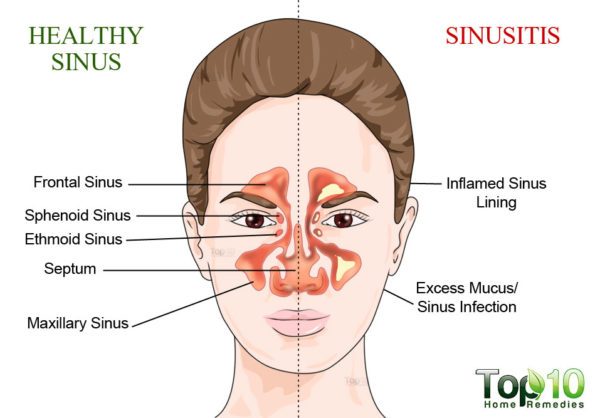
Sinuses are hollow, air-filled sacs behind the cheekbones and forehead that, when filled with fluid, harbor germs giving rise to infection.
Other conditions that can cause a sinus infection include allergies, nasal polyps, a deviated septum, and exposure to pollutants and tissue irritants like over-the-counter nasal sprays, cigarette smoke and cocaine.
Common symptoms of sinus infections include a headache, facial tenderness, pain or pressure, nasal stuffiness, discolored nasal discharge, a sore throat, cough and fever. Some people may experience increased sensitivity or a headache when leaning forward.
To relieve the symptoms of a sinus infection, you can use some easy natural home remedies. Also, consult your doctor for proper diagnosis and treatment.
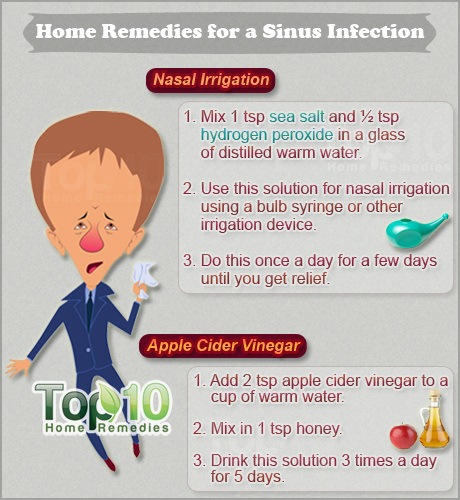
home remedies for a sinus infection
Here are the top 10 home remedies for a sinus infection.

1. Nasal Irrigation
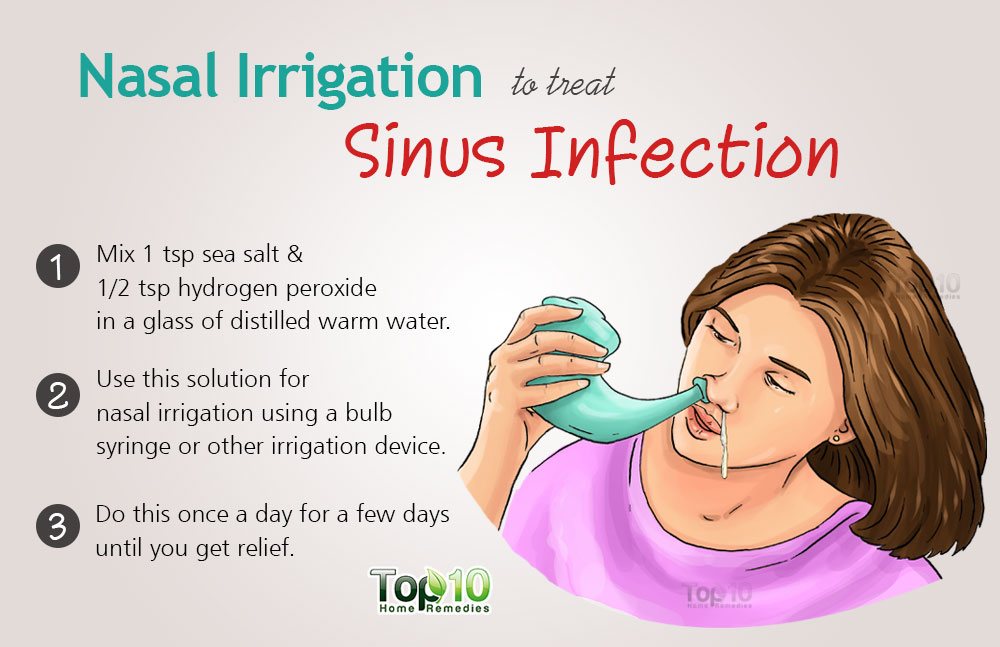
nasal irrigation for sinus infection
Nasal irrigation is highly beneficial for sinus infections as it helps clear out mucus and other debris from your sinuses. Plus, it keeps them moist.
  • Mix one teaspoon of sea salt and one-half teaspoon of hydrogen peroxide in a glass of distilled warm water. Use this solution for nasal irrigation using a bulb syringe or other irrigation device. Do this once a day for a few days until you get relief. Do not use it more often than daily as it may irritate the mucus membranes.
  • Alternatively, mix one-half to one teaspoon of pickling or canning salt and a pinch of baking soda in a cup of lukewarm distilled or previously boiled water. Use this solution for nasal irrigation. You can use it two or three times a day for about a week.

2. Apple Cider Vinegar

Apple cider vinegar has antiviral, antibacterial, antifungal and anti-inflammatory properties that help treat sinus infections. Taking apple cider vinegar at the start of colds, flu or allergies can help prevent a sinus infection from developing.
  1. Add two teaspoons of apple cider vinegar to a cup of warm water.
  2. Mix in one teaspoon of honey.
  3. Drink this solution three times a day for five days.

3. Cayenne Pepper

Cayenne pepper is an effective home remedy to open up and drain the sinuses. Also, it boosts immunity, reduces swelling and inflammation, and improves circulation.
  • Mix one teaspoon of cayenne pepper in a cup of hot water. Drink it two or three times a day.
  • Alternatively, you can eat a mixture of one teaspoon each of cayenne pepper and honey a few times a day.
Use either of these remedies for a few days or until you see improvement.

4. Onion

Onion works as an excellent decongestant to open up your sinuses. Plus, it contains sulfur compounds that fight bacteria and fungi.
  1. Chop an onion into small pieces and put the pieces in a pot of water.
  2. Let it boil for about five minutes, and then inhale the vapors for a few minutes.
  3. Next, strain the liquid and drink it.
  4. Repeat a few a times a day for about a week or until the congestion clears.

5. Garlic

Garlic works as a natural antibiotic to fight sinus infections caused by bacteria and viruses. It is particularly beneficial when the sinus infection is caused by bacteria. Garlic also has antifungal properties.
  • Chop two or three garlic cloves, add them to a pot of boiling water and inhale the steam of this garlic-infused water for a few minutes. Repeat a few times daily until you get relief.
  • You can also eat two to three fresh garlic cloves (preferably crushed) daily. Also include onion, garlic, cayenne pepper and horseradish in your soups and meals to help get rid of excess mucus.

6. Horseradish

Horseradish is another popular remedy for sinus infections as it helps remove mucus from the nasal passages. It also contains high levels of sulfur and works as a natural antibiotic.
  1. Put a pinch of freshly grated horseradish in your mouth.
  2. Hold it in your mouth until its flavor dissipates, and then swallow it.
  3. Repeat a few times a day for about a week or until the infection clears.

7. Ginger


Ginger has antiviral, antibiotic and anti-inflammatory properties that help treat sinus infections. The polyohenols present in ginger help inhibit the secretion of mucus, while maintaining normal nasal ciliary motility. Healthy cilia are important for sinus health as they filter allergens and prevent sinus infections.
  1. Cut a two-inch piece of fresh ginger root into slices.
  2. Boil the slices in one cup of water over low heat for about 10 minutes.
  3. Strain the solution, and mix some lemon juice and honey in it.
  4. Drink this tea a few times a day for about a week or until you get the desired results.

8. Oil of Oregano

This essential oil has antiviral, antibacterial and antifungal properties. Plus, being an anti-inflammatory, it helps reduce inflammation. It also works as a great antioxidant and immune-booster.
  • Put a couple of drops of the oil of oregano in one-half cup of boiling water and inhale the steam to clear the congestion and open up the sinuses. Do this daily until the infection is gone.
  • Alternatively, mix two or three drops of oregano oil in a glass of water. Drink this solution twice daily until the infection clears.
  • Another option is to simply put a drop or two of the oil under your tongue daily for about a week, or until you get positive results.

9. Turmeric


Turmeric has antibiotic, antiviral and anti-inflammatory properties that help treat sinus infections and congestion. It has an active compound called curcumin that helps heal the swelling in the sinus cavity and clear the airways.
  • Mix a pinch of turmeric powder in a glass of warm water. Gargle with it a few times a day for a few days.
  • You can also drink a glass of hot milk mixed with one teaspoon of turmeric powder and a little honey. Drink it daily for about one week or until the infection clears.
  • Another option is to create a turmeric smoothie by blending two pieces of turmeric root (two inches), juice from one lemon, one tablespoon of honey, a pinch of cayenne pepper, one banana and one-half cup of water. Drink this smoothie daily for a few days.

10. Steam

Breathing in steam will help relieve nasal congestion and clear sinuses. Plus, a warm compress will help reduce sinus pressure and headaches.
  • Run a hot shower and breathe in the steam vapors for about five to 10 minutes. Do this daily for a few days until the infection clears.
  • You can also place a wet, warm towel on your face for a few minutes, several times a day for a few days to help relieve sinus pressure.
In addition to these remedies, follow some simple measures like drinking plenty of water to thin the mucus and using a humidifier to keep the nasal passages moist. Plus, adequate rest will facilitate speedy recovery.

Saturday, 17 March 2018

How to distinguish sinus infection from a cold?

A sinus infection, also known as sinusitis, is a very common upper respiratory tract infection that affects millions of people every year.
It occurs when your nasal cavities become swollen and inflamed. It is usually caused by a virus and often persists even after other upper respiratory symptoms are gone.
understanding sinus infection
This type of infection may be acute or chronic. Acute sinusitis only lasts for a short time, whereas chronic sinus infections last for more than six to eight weeks or frequently recur.
An untreated sinus infection can potentially damage the sinuses and lead to ear infections, vision loss or even meningitis, so it is important to treat it right away. But treating a sinus infection is often delayed because people do not recognize a sinus infection in the initial stage. 
symptoms of sinus infection different from cold
Early symptoms of a sinus infection and a cold are very much alike, usually including a stuffy nose, slight fever, a scratchy throat, and feeling fatigued and just sick.
When it is a cold, the symptoms start improving in three to five days and you start feeling better within a week. But if symptoms persist for more than a week, you most likely have a sinus infection.

Here are some symptoms of a sinus infection that can help you distinguish it from a cold

1. Pain in Your Face

One of the best ways to distinguish between a common cold and a sinus infection is the pain and pressure you feel in your face with an infection.
pressure in your face due to sinus problem
Pain from a sinus infection can occur in and around your nose, in your upper jaw and teeth, and between your eyes. The accumulation of mucus in the sinuses also causes a feeling of heaviness or pressure in your face.
The pain may be worse when you move your head forward or touch the areas overlying your sinus cavities. Also, the maxillary sinuses located under your eyes may be painful when pressed or touched.
2. Yellowish or Greenish Discharge
Discolored nasal discharge – green, yellow or blood-tinged – is another sign of a sinus infection. This is mainly due to the virus in your system, which causes the discharge to change colors.
yellowinsh or greenish discharge due to sinus problem
The discharge may also bypass your nose and flow down your throat, leading to tickling or itching sensations in the back of your throat.
Also, the discharge will be thick and hard to blow out of your nose. This is another major distinction between a sinus infection and a cold. The nasal discharge you experience with a common cold is clear and more liquid in nature.
When suffering from a sinus infection, you’ll find that you need to blow your nose more frequently to get rid of the thick accumulated mucus.

3. Coughing Up Phlegm

A cough often accompanies a sinus infection, but many people assume it is due to a cold or bronchitis.
coughing up phlegm sign of sinus infection
Coughing due to a sinus infection usually is worse at night and in the morning. This is mainly because the sinuses drain down the back of your throat when you lie down, which triggers the cough receptor in the back of the nasal pharynx.
This type of cough also produces phlegm. Phlegm contains the bacteria or virus as well as inflammatory cells produced in response to an infection. The body tries to expel the phlegm that travels to your lungs through coughing.
You can reduce the frequency and intensity of your coughing by sitting upright to sleep. It will also help you sleep better, which is important for recovery.

4. Stuffy Nose that Lasts Longer

A stuffy nose is a classic symptom of both a sinus infection and a cold, but it usually lasts longer when it’s due to sinusitis.
stuffy nose due to sinus infection
This symptom is mainly due to inflamed blood vessels in the sinuses. Your inflamed sinuses may also make it difficult for you to breathe through your nose, giving you the feeling of a stuffy nose. Your voice may also sound “stuffy.”
To ease the problem, inhale steam or take a hot shower to thin the mucus so it’s easier to expel.

5. Headache

Another very common symptom of a sinus infection is a headache, but most people mistake it for a tension headache.
headache symptom of sinus infection
A sinus infection makes the nasal area as well as forehead feel so congested that it hurts and leads to a headache.
Also, the inflammation in the nasal area causes tightening of the muscles around the forehead and the top of your head, making the headache even worse. The headache can be unilateral (on one side) or bilateral (on both sides).
This type of headache usually gets worse when you bend forward and after waking up in the morning. The pain also can get worse if the temperature of your environment changes suddenly, like when it’s very hot outside and you enter an air-conditioned building.

6. Bad Breath

Bad breath, medically known as halitosis, is another common symptom of a sinus infection. In fact, they go hand in hand.
bad breath sign of sinus infection
The back of the tongue, which resides in the throat, is home to bacteria that cause bad breath. During a sinus infection, excess mucus that is produced often slides down the back of your throat.
As the bacteria are bathed in mucus, it causes bad breath. This type of bad breath usually goes away once the sinus infection clears up.
To improve the smell of your breath, maintain oral hygiene by brushing twice a day and flossing once daily. You can also use a mint-flavored mouthwash.

7. Toothache

Believe it or not, pain in the upper teeth is a fairly common symptom of a sinus infection.
toothache could be a symptom of sinus infection
This pain is not an indication of an actual problem with a tooth. Rather, the pain occurs due to all the pressure building up in the sinus cavities in different areas of your face, which gives the impression of a bad toothache.
Also, this pain is bilateral, meaning it occurs on both sides of the face and affects the upper back teeth, which are closest to the maxillary sinuses.
If you have a persistent toothache, consult your doctor to determine whether the pain is due to a sinus infection or other possible dental issues like periodontal disease, teeth grinding, cavities or dental abscesses.

8. Stuffy Ears

Along with a stuffy nose, a sinus infection can cause stuffy ears. It’s a muffled-ear sensation, like the one you may experience in a descending plane. Small children may even complain of mild ear pain.
Your sinuses and ears are connected inside your head. So, the congestion and inflammation of the nasal passages can affect the pressure in your ears.
Also, a buildup of pressure in the inner ear can make you feel dizzy at times.

Thursday, 15 January 2015

16 Natural Ways To Get Rid Of A Headache Fast

Headaches aren’t unhealthy by themselves, headaches are a sign that tell us that something is wrong, however our body does not always give straight and clear signals that tell us how to behave. When our body is dehydrating, we don’t always feel thirsty, and most often headaches is your body telling you to hydrate. Most adults require anywhere between two to five litres a day depending on their height and weight and depending on the type of lifestyle they have.
If the reason behind the headache is dehydration, then you can easily get relief from the pain by drinking large amount of water. Water is very effective home remedy for headaches. Simply drink a glass of clean, filtered water at the first sign of headache and continue taking small sips throughout the day. Once your body gets hydrated the pain will automatically start to ease. When suffering from a headache, it is advisable to stay away from any kind of drinks that can dehydrate your body, especially caffeinated.
2. Massage Scalp, Neck and Ear Lobes
Doing some light massage can distract you from the pain, as well as improving circulation and relieving tension. For a basic massage, gently press your fingers over your temples, and move them in slow circles. Or, try these more advanced techniques:
Do a scalp massage. Hop in the shower and treat yourself to a long scalp massage as you shampoo your hair. Or, for a drier version, pour a little bit of coconut or argan oil on your fingers and rub into your scalp.
Find two tennis or racquet balls and put them in a sock. Lie on a flat surface and place the two balls just below the base of your skull, on the occipital bone, and relax. You may feel sinus pressure or minimal discomfort at first but it will go away. This is especially helpful for sinus headaches.
Have someone else massage your neck and back if possible. The simple touch of someone else who cares about you can relieve a lot of tension instantly. Have them focus on the occipital region as well.
Gently massaging the bridge of your nose can help relieve sinus and migraine headaches.
Massage the soft part of your hand in between your index finger and thumb. Nerves in that spot allow your blood vessels in your forehead to constrict.
Firmly massage the acupressure point on each hand where the thumb and index finger bones meet (second metacarpal bone). It’s best if somebody does this for you, so both hands can be massaged simultaneously, but if that’s not possible, massage one hand for five minutes, then massage the other hand.

3. Ice Pack
Using an ice pack to apply cold compress over the forehead can give quick relief from headaches. To apply cold compress you can also apply a cold cloth on your head and temples for ten minutes and again repeat the process after some time until you get some relief. A bag of frozen vegetables can also serve as an icepack. When cold compresses are placed over the forehead, it numbs the pain and helps the blood vessels to shrink and improves the blood circulation, thus giving relief from the pain. This particular remedy works when the headache is due to stress or sinus.
4. Practice Relaxation Techniques.
People around the world use a variety of tricks to distract themselves from pain. If you’re in the midst of a headache, don’t worry about learning something new — stick to whatever is closest to your comfort zone. (You can always read up on different meditation techniques later, when you feel better.) Some popular options include:
Meditation.
Prayer
Deep breathing
Visualization
Listening to binaural beats
Try to just calm down. If you can fall asleep, that might help.
5. Hot Water
Applying heat on the back of your neck with the help of a hot water bag can give you relief from headache caused due to stress. When heat is applied it relaxes the tense muscles thus giving relief from the throbbing pain. Along with a hot water bag, you can also take a hot shower. Another option is fill a tub with bearable hot water and then put your hands in it for ten to fifteen minutes. When you do this, blood circulation improves and thus giving your relief from the headache. For those suffering from chronic headache, must keep their legs dipped in a bucket filled with hot water for ten minutes before going to bed.
6. Lemon
Lemon is very effective and powerful ingredient to treat headache pain. When you drink warm water mixed with some lemon juice, it reduces the intensity of a headache. This particular home remedy is beneficial when headache is caused due to gas in the stomach. Another option is apply lemon crust paste on the forehead to get immediate relief from the pain. At the same time you may also drink a steaming cup of lemon tea three to four times a day when suffering from headache.
7. Feverfew
Can be taken in capsule or tablet form, as a tea, or even eaten in a sandwich (it tastes bitter). There is mixed evidence to support the effectiveness of feverfew but it has been relied upon for centuries, so it might be worth trying. There are no serious side effects, although you might experience a sore tongue, mouth ulcers, or nausea, digestive problems and bloating. Coming off long-term use of feverfew can disrupt sleep and actually cause headaches.
8. Betel Leaves
Betel leaves are known for their analgesic as well as cooling properties which can hugely help to get rid of a headache effectively within a few minutes. For this remedy, you need to take two to three fresh betel leaves and with the help of a grinder make a fine paste out of it. Now apply this paste on the forehead and both sides of the head for half an hour. Soon you will get relief from the intense pain. At the same time you can also chew one or two betel leaves to treat headache.
9. Aromatherapy
Aromatherapy preparations vary considerably but some of the more commonly used essential oils for headache treatment include lavender, sweet marjoram, and chamomile. Use for neck massaging, in a bath, or to inhale. Mix five drops rosemary oil, five drops nutmeg oil, five drops lavender oil in a carrier oil. Massage on the neck and upper back area.
10. Ginger
Ginger has got anti-inflammatory properties that can help in easing headache pain. At the same ginger helps in relaxing the blood vessels in the head and reduces swelling in the brain and activates natural opiates in the brain which helps in lessening the pain associated with tension headache. When having a headache, you must drink ginger tea three to four times a day to reduce inflammation in the body. However, it is important to take ginger tea at the very beginning of a headache. This will help the ginger to act quickly and lessen the headache.
11. Apple
When you wake up in the morning with a headache, you must eat a piece of apple by applying some salt to it and then drink some warm. Soon you will be able to get rid of persisting headache. Along with apple, you can also use apple cider vinegar to treat headache. Fill a large bowl with steaming hot water and add three to four tablespoon of apple cider vinegar into it. Now place a towel over your head and take the steam for ten to fifteen minutes. Another option is to add some apple cider vinegar to a glass full of water and drink it two to three times a day to alleviate headache.
12. Almonds
Almonds contain pain-relieving chemicals that may reduce your headache symptoms in as little as 10-15 minutes. A handful of almonds is always a handy natural substitute for any over the counter quickie.
13. Cayenne pepper
Another endorphin stimulant, cayenne will help to alleviate your headache. Both consumption and topical applications are know to cure some of the worst headaches. Sweet Relief Cream is one type of topical application that works very well, especially when combined with DMSO.
14. Peppermint
Peppermint has got calming and soothing properties that can help in the treatment of headaches. You can make herbal tea by adding one teaspoon of dried peppermint herb in a cup of hot boiling water. Cover and allow it to steep for ten minutes, then strain it and add some honey to sweeten it before sipping it slowly. You can also use peppermint oil to gently massage the temples, jaws and the back of your neck. This will give you instant relief from the pain. In addition, inhaling the soothing aroma of peppermint steam can ease the symptoms associated with headache such as vomiting.
15. Eucalyptus Oil
Eucalyptus oil has got pain relieving as well anti-inflammatory properties. To quickly get rid of headache you must use eucalyptus oil to massage the forehead and temples for fifteen to twenty minutes. The oil will provide a soothing effect thus giving relief from the pain. At the same time it will also help in relaxing the tense muscles around head. Along with eucalyptus oil you can also coconut oil or almond oil to massage the forehead in order to get rid of your headache.
16. Cinnamon
Cinnamon is another herb that can effectively treat headache. Take some cinnamon sticks and grind them to make a powder out of it. Now add some water to this powder to make a thick paste and apply it on your forehead and temples and lie down for half an hour. Soon you will get relief from headache. After some time wash your forehead with lukewarm water. This remedy is helpful when headache is caused by exposure to cold air.

Posted by: tosin January 14, 2015
source: wake-upworld.com